
NEWSLETTER TABLE OF CONTENTS
- A Letter from the Chair
- Department News
- Department Initiatives
- Student Recognition
- Student Capstone Experiences
- Distinguished Alumni
- Alumni News
- Support GES
Letter from the Chair
 From new leadership and faculty hires to groundbreaking research and alumni achievements, the Geology and Environmental Science Department is shaping the next decade of innovation—thanks to your continued support!
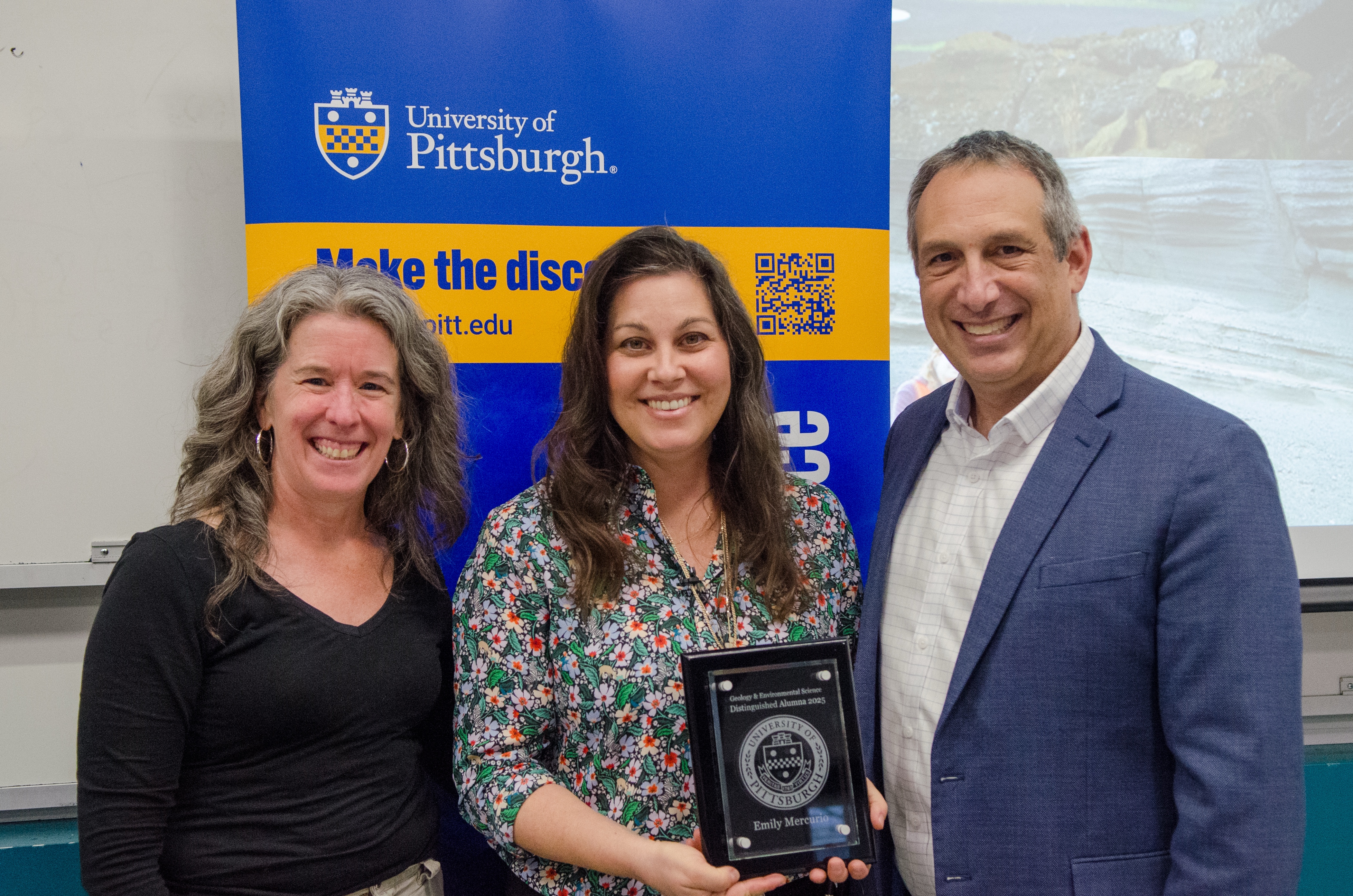
The Geology and Environmental Science (GES) Department is buzzing with exciting updates in 2025! We welcomed a new Chair and celebrated the incredible leadership of Josef Werne, who guided us through the pandemic, strategic planning, and the hiring of eight new faculty members. Looking ahead, two dynamic scholars—Amanda Donaldson (ecohydrology) and Gavin Piccione (geochemistry and climate science)—will join us in Fall 2026! Our faculty and students continue to push boundaries in research, from uncovering lithium in fracking wastewater to modeling Martian lava flows, with recent publications in Scientific Reports, Science Advances, and Biogeochemistry. Graduate students have earned prestigious fellowships from NASA, DOD, NSF, and ARCS, while alumni shine brightly—Emily Mercurio (PhD ’11), CEO of CivicMapper, and Carole Lojek, a leader in environmental security and technology innovation, were honored as Distinguished Alumni. We’re proud of all our students and alumni whose excellence elevates GES every day. Thank you for your support—your gifts make extraordinary opportunities possible. Stay connected, and if you’re in Pittsburgh, stop by and see us!
Here's the 2025 academic year's full Chair's Letter.
Department News

Dr. Dan Bain, along with the Pittsburgh Water Collaboratory, inspiring future geologists and environmentalists at Pitt's Annual Bring Your Child to School Day.
Learn about how our faculty and staff are preparing students for success, whether they pursue careers in industry, academia, government, or the nonprofit sector through instruction and research.
- Mark Abbott
- Professor
- Director of Climate and Global Change Center
- University of Pittsburgh Tenure Committee Representative for GES
- Google Scholar
Update
Research continued with former postdoc Pankaj Sharma to develop records of monsoon strength in NE India from Loktak Lake as well as submitting a paper focused on the last 3500 years. Melissa Griffore successfully defended her PhD dissertation titled Mercury Dynamics in Permafrost-Affected Watersheds from MIS 3 through the Holocene: Insights from Alaskan Lake Sediment Records, as well as publishing a paper documenting changes in mercury mobility from permafrost during past thaw events in Science of the total Environment and submitting a second paper to Environmental Science and Technology on mercury dynamics in permafrost. Jamie Vornlocher also successfully defended her PhD dissertation titled Climate Variability in Southwestern North America: Insights from a Uniquely Long, Continuous Sedimentary Record from Fish Lake, Utah and submitted a paper on the 60+ ka sediment record from Fish Lake UT to Quaternary Science Reviews using stable isotope analyses to document changes in precipitation source over time. Hailey Sinon to published two papers: one in Quaternary Science Reviews documenting the history of permafrost thawJunin, Peru. Adeel Jehangir had a second very successful field season in Pakistan coring lakes in the high Himalia and also in the lowlands impacted by the monsoon. His work is some of the first lake coring efforts in Pakistan and will provide new paleoclimate data for an understudied region. Cole Barre started his PhD work in the fall and is working on a number of projects in his first year combining studies of Lake Junin in Peru, Uchhali in Pakistan, and is planning a field season in northern Minnesota for January 2026 to recover varved sediment records.
- Daniel Bain
- Associate Professor
- Director of Graduate Studies, GES
- Google Scholar
Update
First and foremost, we want to express that our thoughts are with our students and alumni every day—especially those serving in federal and academic roles or actively seeking opportunities this year. While we share in your challenges, we recognize that the impact is often greater at your stage in your career. Please don’t hesitate to reach out if there’s any way we can support you.
That aside, I am once again happy to brag that the students in my group have done an excellent job over the last year. Justin Mackey defended his dissertation in January and Clement Campbell and Sophie Meyer defended their Masters and Undergraduate Thesis in April (respectively). In addition, Clement was recognized with the NCAA Post-Graduate Scholarship. Abiodun Ayo-Bali and Mari Avkopashvili both passed their comps. Bali published his Masters research in Water, Air, and Soil Pollution and Mari was invited to give one of the talks at the Pittsburgh Geological Society’s annual Student Night. Anthony Schneider and Adnan Deshaee joined the team, Anthony bringing a DoD SMART Fellowship and Adnan earning a Mellon Fellowship for next year. Many other undergrads worked with me, doing excellent work. Mackenzie Zabroba presented her work on landslides and the National Conference on Undergraduate Research meeting in Pittsburgh this spring. Madison Naylor examined urban soil metals, Alexandre Massip mineral nutrients in salted urban streams, and Marissa Wycinski legacy impacts of underground storage tanks. As you can see, I have to run as fast as I can to just keep up.
- Anusha Balangoda
- Teaching Assistant Professor
- Environmental Science Program Advisor
- Google Scholar
Update
Cooperative learning is an active, student-centered approach in which small groups share responsibility for both their individual learning and the overall success of the team. I propose implementing cooperative learning in GEOL 0840, an introductory Environmental Science course with high enrollment that includes mandatory lectures and recitation sessions.
In this course, students are expected to understand scientific methods, think interdisciplinarity, and apply their knowledge to solve real-world environmental problems. To support this, recitation sessions will focus on engaging students with the course content and methods through peer discussions in small groups. Collaborating to investigate and interpret environmental issues will help students develop a deeper understanding of the material presented in class. Furthermore, encouraging students to appreciate diverse perspectives and engage with one another respectfully will foster a more inclusive learning environment where everyone feels safe to contribute and grow.
- Rosemary Capo
- Professor
- Assistant Dean of Recruitment and Belonging, Dietrich School of Arts and Sciences
- Academic Integrity Officer, Dietrich School of Arts and Sciences
- Faculty Diversity Committee member, Dietrich School of Arts and Sciences
- Co-chair: Recruiting Subcommittee, Sloan Center for Systemic Change, University of Pittsburgh
- At-large member: Award Committee, Geological Society of America Doris M. Curtis Outstanding Woman in Science
- AGU24 Presenter: Networked Improvement Community-based Initiatives to Broaden Participation and Improve Outcomes for STEM Ph.D. Students at the University of Pittsburgh
Update
Brian Stewart and I began work last summer with Ph.D. Tash Boothe, former Ph.D. student Ben Hedin (now President and co-owner of Hedin Environmental) on a new NSF-funded project investigating the capture of critical metals such as rare earth elements by acid mine drainage treatment systems. We’re also working with Carnegie Museum curator Travis Olds and co-PI Margaret Ann Hinkle (Washington and Lee University) on micro-characterization of critical metal-enriched biotic and abiotic metal oxides. Ph.D. student Camille Schaffer published her second first author paper and has a third in revision; she successfully defended her dissertation and is now a Research Scientist with Lithos Carbon in California. Kristi Dobra also published a first author paper in Environmental Science & Technology, presented at meetings in Ann Arbor, Chicago and Sweden and completed her Ph.D. this spring; she’s an Environmental Resource Specialist with the US Army Corp of Engineers. Former Ph.D. student Becca Matecha completed her first year as Asst. Professor of Geology at Mercyhurst University. Tash Boothe completed her Mellon Postdoctoral Fellowship this year; she presented results of her research on critical metal uptake on biotically mediated AMD Mn oxides at Mine Water Association Congress in Morgantown WV and at the GSA regional meeting in Erie, PA. Ph.D. student Kristi Dobra and undergrads Tyler Weinberger and Amelia Aceves presented results on projects related to trace metal uptake by freshwater native and invasive bivalves in the Ohio River watershed at AGU in Washington DC. Tyler also worked with data analyst Emma Capo-Stewart and will defend his Honors College B. Phil. Thesis this summer.
- Abigail Carroll
- Teaching Assistant Professor
- Environmental Science Program Advisor
Update
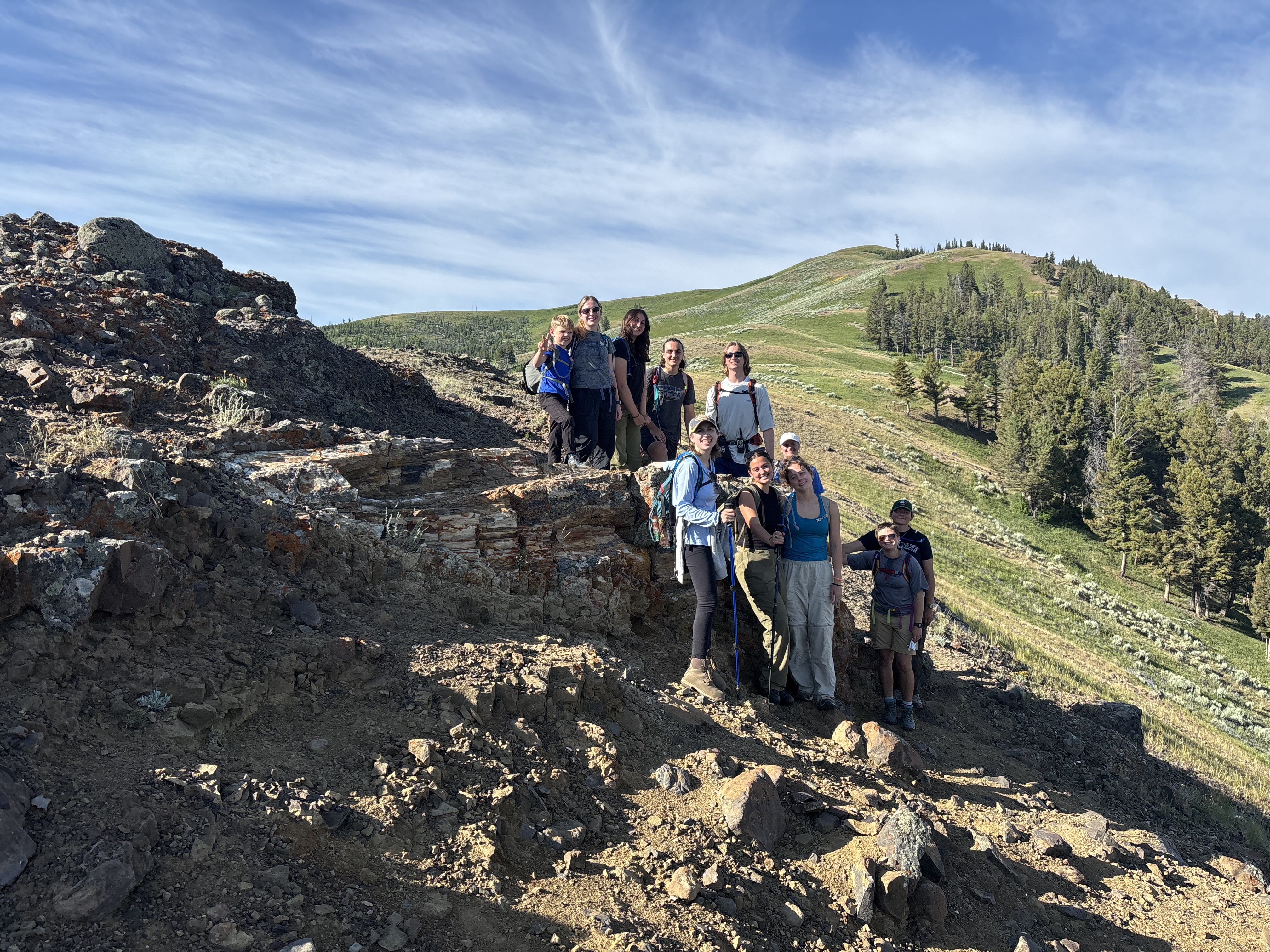
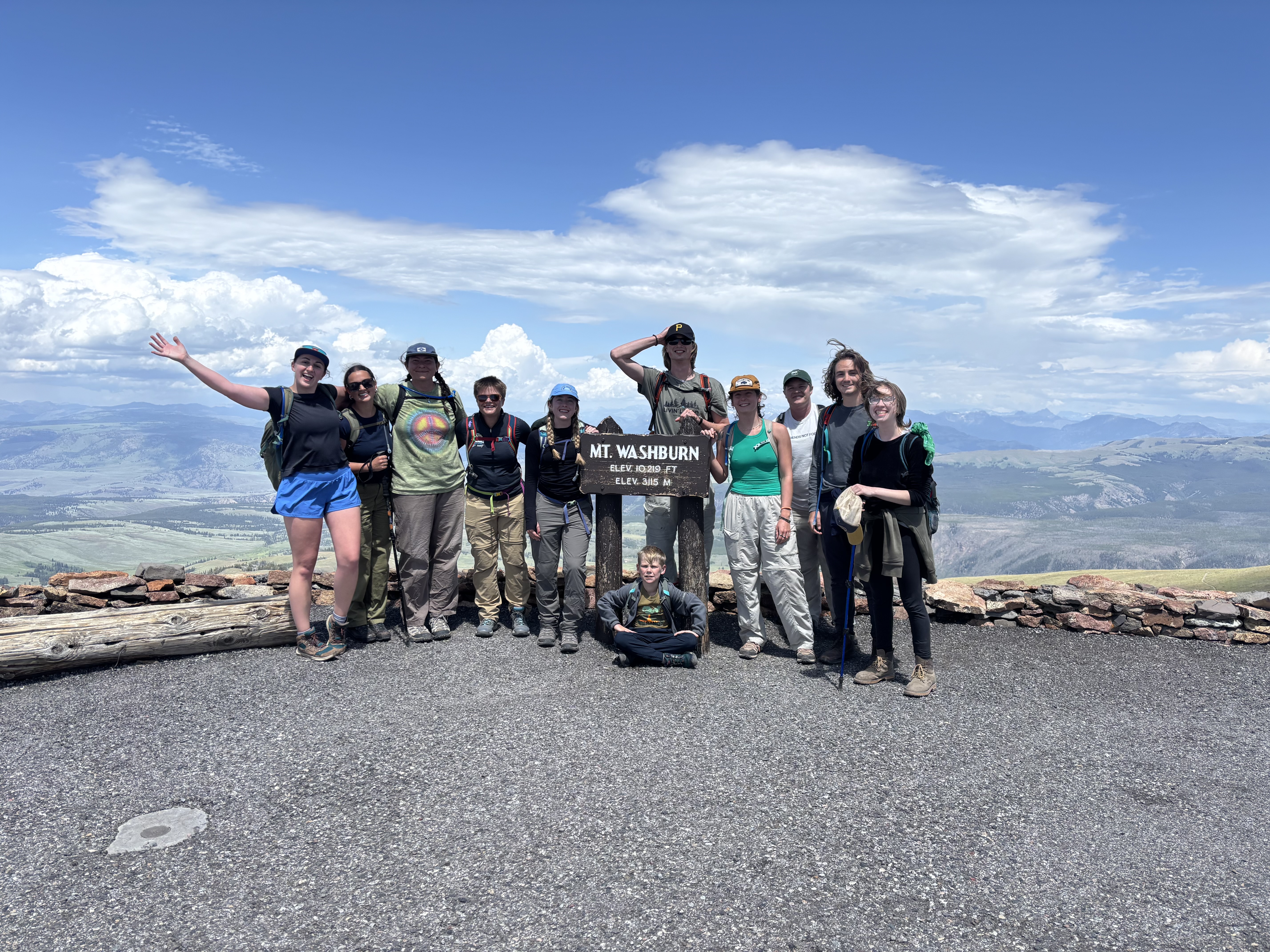
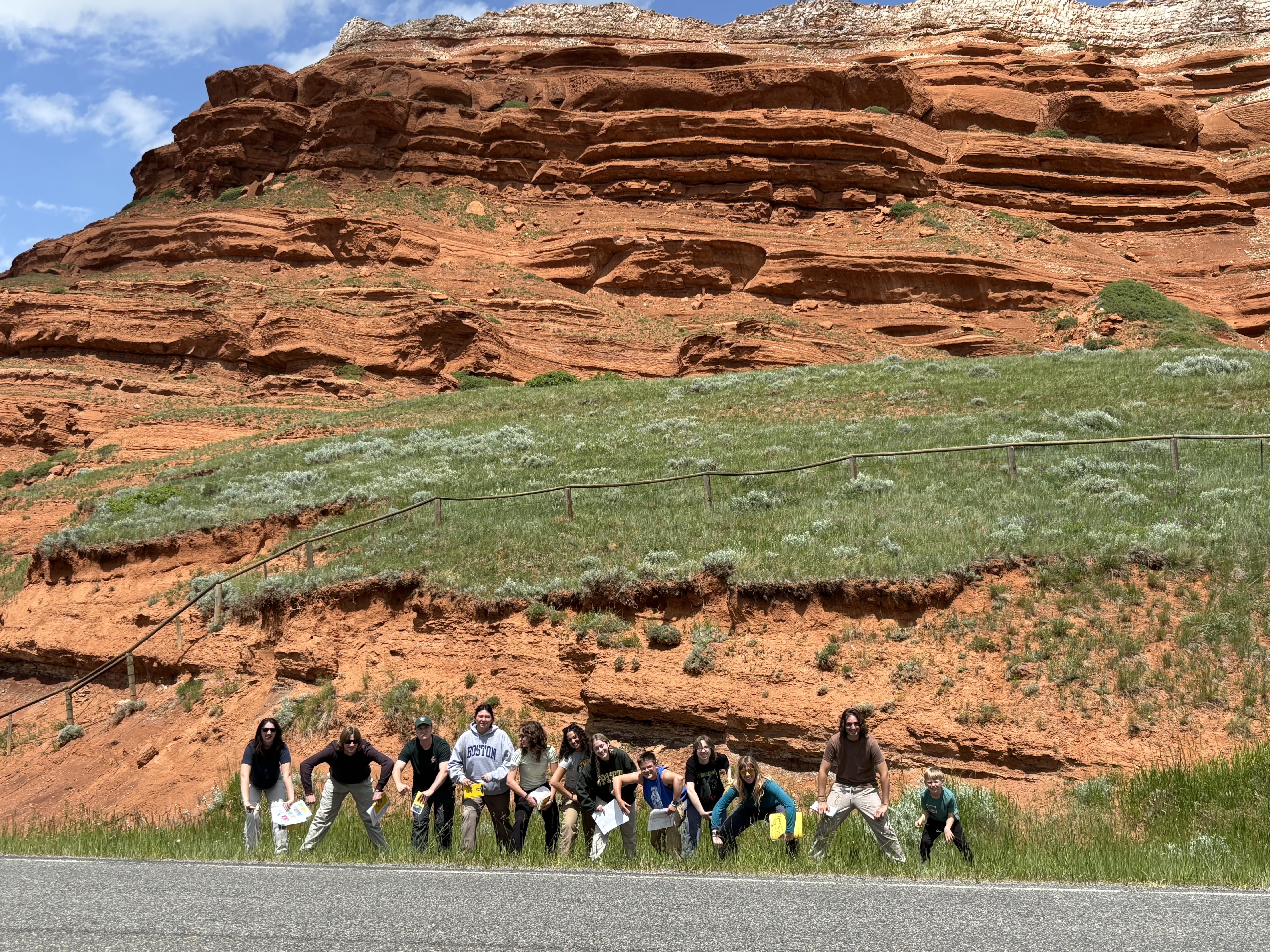
Over the past academic year, my most rewarding (and time-consuming) project has involved the re-designing and re-launching of the department’s famous Yellowstone Field Course. I will be co-teaching this course with Dr. Rory Carroll (a wildlife ecologist in the Biological Sciences Department ...also my husband) starting this June, 2025. Over the course of this past year we have:
- Ran a reconnaissance trip to Yellowstone to plan field stops, activities, test out appropriate hikes, and visit with stakeholders who’d be willing to meet with our students.
- Led an advertising campaign to attract students to the program.
- Re-designed the course so that students are getting more value out of the experience. It now it consists of two classes that must be taken concurrently: Geology of Yellowstone and Ecology of Yellowstone, each 3-credits.
As of January 2025, we had 28 applications to the program. This year we are able to take 10 students (all of them now registered and raring to go), and hoping to take many more in future years! I am so proud of how far we have come in this re-launch. It has been a lot more work than I ever anticipated, but I know it will be 100% worth it when we are out there with the students this summer!
- Mark Collins
- Teaching Assistant Professor
- Environmental Studies Program Advisor
- Fellow, Humanities Center (2025)
Updates
- After many meetings and input from the Undergrad Committee, I submitted a revamped Environmental Studies curriculum.
- Currently advising approximately 70 undergraduate student, and advise student who are interested in our program, but are not officially registered.
- Started two new classes: GEOL 1909 Introduction to ESG (debuted Spring 2025) and GEOL 1913 What to Do? (debuts Fall 2025 with Dr. Gretchen Bender, HAA
- Highlighted in PittNews Article: GES Environmental Studies instructor - Mark Collins: the practical and empathetic “poet of life experience”
- Emily Elliott
- Professor, Mellon Chair
- Chair, Pittsburgh Water Collaboratory
- ESA Fellow
- Google Scholar
The Elliott research team and the Pitt Isotope Tracers Lab has had a busy and productive year. We purchased and installed a new Isotope Ratio Mass Spectrometer system in Fall 2024. This system includes peripherals for measurement of stable isotopes of greenhouse gases and elemental analysis of C, O, N, S isotopes. We welcomed Dr. Rupa Bardham as a Research Assistant Professor to our team who will oversee management of the Pitt Isotope Tracers Lab. We also welcomed first year PhD student Jason Aguirre. Graduate students Abby Yancy and Camille Butkus mentored stellar undergraduate research by Olivia Rossi and Mare McGrory, respectively. Together, we’ve been exploring the sustainable liposomal carriers for fertilizer, invasive knotweed, sewer impacts to trees and stream food webs, and the impact of drinking water anticorrosive agents on stream chemistry. Our long-awaited lab renovations have been completed!
- Bill Harbert
- Professor
- Co-Director Alfred E. Sloan Professional Masters of Science in Geographical
- Information Systems and Remote Sensing, Dietrich School of Arts and Sciences
- Co-Director Undergraduate Certificate Geographical
- Information Systems, Dietrich School of Arts and Sciences
- Society of Exploration Geophysicists Council,
- Member of Research Committee and Continuing Education Committee
- Geophysical Society of Pittsburgh Executive Committee Member
Update
As a professor of geophysics at the University of Pittsburgh I have actively interacted with professional, community, research, and academic scientists in the areas of petrophysics, reservoir monitoring, machine learning, GIS and geophysics. At the University of Pittsburgh, I have successfully advised or co-advisor of 53 MS and Ph.D. students. During this review period I continued the award of $77,819,349.34 of software and support resources for Pitt from Schlumberger. This represents $78 million in resources during this period. I also continued to work with an RUA with a major company to acquire an amazing geophysical dataset and am working with Mohamed Hamdallah, a Ph.D. graduate of geophysics. In addition, another graduate student has been hired by the National Energy Technology Laboratory as a federal project manager. I have served as an external member on Ph.D. committees in Civil and Environmental Engineering. In addition to being an Oak Ridge Institute for Science and Education (ORISE) associate at the US Department of Energy/NETL I am active participating with professional and scientific organizations. I am a member of the AAPG, SEG, and SPE. I was an officer of the Geophysical Society of Pittsburgh and helped organize the fifth Appalachian Basin Geophysical Symposium (ABGS) meeting, which was held in-person. In addition, I aided in the organization in Pittsburgh of the SAGE/GAGE Community Science workshop for IRIS that was held in Pittsburgh. I am a lifetime membership in the SEG, I presented two separate 8-hour short courses within the SEG continuing education activity focused on 1) Petrophysics relevant to CO2 Sequestration and 2) the H2 energy transition. I will utilize all these connections in synergistic activities related to this faculty position and my continued research and work.
11/2024 Distinguished Contributor, SEG workshop, Advancing Carbon Capture, Utilization and Storage (CCUS) East Asia Perspective, Qingdao, China.
11/2024 Instructor, Continuing Education Professional Training Program 2024 SEG Training Course, BGP, “Petrophysics and Geophysics Relevant to Underground Gas Storage, Monitoring, and Utilization”.
- Charlie Jones
- Teaching Professor
- Geology Program Advisor
- Member of the Environmental Science advisory board for West Chester University
- Multiple scholarship committee member, including the Mellon Scholarship
- Curator for the GES Rock Museums
- Google Scholar
Update
The nostalgia news is that once again I ran the fall and spring field trips. For over a week the weather threatened 1.5” to 3” of rain for the entire weekend from the Burger King outcrop to Gettysburg. That’s a lot of rain to take field notes in! Then at the very last minute the forecast changed to suggest I should flip the order of the trip: 0.5” of rain in Gettysburg on Saturday and 1” at Burger King on Sunday. So we flipped the trip and flipped off the weather and lo! It worked! The rain held off until 10:30 pm on Saturday, and then a heavy rain started. Turns out one of the rainflies of a departmental tent became hypertransmissive and started pouring water through the screen at the top of the tent. But otherwise all was good. We stayed mostly dry, plenty warm, and found extra fossils in the Reedsville by greater metropolitan Loysburg.
In other news, after many years I brought back the invertebrate paleo class! Several people really wanted it taught, so I did it. To make the labs more compelling I purchased some very nice specimens to replace the old casts we had of things like crinoids, brittle stars, and trilobites. I even managed to get a pair of fossil trilobites that are the same position that horseshoe crabs maintain when mating, so we now have our very first X-rated specimen!
- Nadine McQuarrie
- Professor
- New GES Department Chair
- Google Scholar
- AGU24 Presenter: The 4-D geometry of the Main Himalayan thrust in central Nepal: causes and consequences
Update
Our group continues to integrate geologic cross section kinematics and erosional exhumation through thermokinematic and landscape evolution models. Two examples of this research include a new explanation for the dramatic canyons that are carved into the northern Andean plateau in Peru. Previously thought to reflect either surface uplift of the plateau or climate change that delivered moisture onto the plateau, our modeling combining structural kinematics with landscape evolution models show that drainage basin capture of structurally controlled basins can trigger the magnitude and age of incision along the eastern plateau margin. Similarly in Taiwan, linking proposed cross section geometries to flexural kinematic models can highlight what fault geometry can or can not reproduce the high topography and high relief of Taiwan. Our ability to replicate topography requires faults to extend to ~ 20 km depth under the Central Range. To reproduce the measured cooling ages across the orogen requires ~ 100 km of young faulting partitioned on both sides of the central range, with much lower rates and magnitude of shortening on the frontal faults of the western foothills.
- Suoya Fan (RAP) – Souya is improving our workflows for integrating thermokinematic and landscape evolution models. Specifically, he is developing workflows for using the landscape evolution model ‘Fastscape,’ which we anticipate will allow greater flexibility to examine larger landscapes (100’s of km along and across strike), more complicated landscapes (integrating changes in fault geometry and kinematics along strike) and incorporating important parameters like rock strength and changing climate.
- Jennie Johnson (GS) – Jennie is examining the deformation, uplift and incision history of the eastern edge of the Andean Plateau in Peru. Her research has focused on integrating kinematic and climate models to model the landscape response to these two inputs
- Aidan York (GS) – Aidan York started September of 2025 and is taking our model approach for geologic cross section kinematics, erosional exhumation and topographic evolution into deeper time to examine the age and rate of faulting through the rocky mountains of the western US and test home much of that iconic topography is related to initial (but old 100-50 Ma) deformation or, how much is more recent and due to dynamic mantle processes,
- Sophia Kosowsky (GS) – Sophia started this year as a Masters student to work on the funded Taiwan project. She has been testing different potential geometries proposed for the central cross island highway and is now taking that insight into a new orogen scale cross section for the southern cross island highway.
Hannah Kovic (UGS) – Hannah is an undergraduate researcher who is using both flexural kinematic models and thermokinematic models test the viability of different cross section geometries across the central cross island highway in Taiwan. She defended a very ambitious undergraduate thesis in May.


Hanna Kovic & Sophia Kosowsky in Taiwan.

Aidan York and fellow students in Montana. - Evan Ramos
- Assistant Professor
- Google Scholar
Update

Evan and Claire collecting a river water sample at a field site in the East River watershed of Colorado, USA The primary achievements of my research group fall within 2 major themes: 1) the development of new reactive transport models for rock weathering and 2) the refinement of our understanding of clay minerals and their impacts on the global carbon cycle. In a recently accepted article to Geophysical Research Letters, I showed how two common isotope proxies for rock weathering – lithium isotopes and uranium isotopes – can be used to refine how different rock types erode at the Earth’s surface. I developed new models of rock weathering, benchmarked against a global compilation of river lithium isotope and uranium isotope measurements, and demonstrated that these isotope proxies directly encode information about rock erodibility and the associated conversion of bedrock to weathered bedrock fragments and clay. Interestingly, both highly erodible rocks (e.g., shale) and highly resistant rocks (e.g., granite) both readily convert to clay, but clay formation in shale is accommodated by greater degrees of rock pulverized to fine sediment whereas clays in granite tend to form at depth in fractures. These findings help us document where and how given rocks weather, with implications for landscape evolution, ecosystem function, and the global carbon and water cycles. Moreover, my research associate Noah Jemison has documented (also through start-of-the-art modeling efforts) how clay mineral formation impacts soil development, showing that clay minerals can enhance the weathering of coexisting minerals by generating acids and taking up metals from water. His work is pivotal for understanding the rate-limiting factors for soil formation, with vast implications for understanding soil production, nutrient retention, and carbon stability in a rapidly changing climate.
As I only started as a faculty member in late August 2024, most other objectives have included training new personnel. My PhD student Claire Mock conducted fieldwork with me, began laboratory work, and is setting up new laboratory methods, including measurements of the ultra-trace metal rhenium. Noah, in addition to developing new reactive transport models, has begun conducting mineral synthesis experiments that dovetail nicely with his modeling efforts.- Mike Ramsey
- Professor
- Member of Pitt Space Initiative
- Representative Dean’s Tenure Council, Dietrich School of Arts and Sciences
- United Nations Global Risk Assessment Framework (GRAF) Working Group
- NASA Surface Biology and Geology (SBG) subject matter expert
- NASA Surface Biology and Geology (SBG) science study group
- NASA Lunar Surface Science Study
- NASA Deep Space Gateway
- AGU24 Presenter: Abstract: Eruption Forecasting: What is possible over the next decade of high-resolution thermal infrared data?
Abstract: Mapping the Earth’s surface: Retrieving global rock-forming mineralogy with future SBG thermal infrared data
Update
In the prior academic year, I had four new NASA projects funded totaling more than $1.7M. This research supports two post-docs, a research professor, a computer programmer, and two early career scientists through subcontracts. It also enabled me the luxury of not pursuing any new grant funding during the past year.
One of these is a Venus science project, which is the first time that I have been funded for data analysis and modeling of this planet. This work funds 80% of Ian Flynn’s salary, which also allowed him (along with his other accomplishments) to be promoted to Research Faculty. The work has gone well, with several abstracts and two papers in preparation. Unfortunately, the cuts proposed by NASA recently may jeopardize this research because the future Venus mission (VERITAS), which this work supports, was cancelled.
Another of the projects is the development of a new drone-based multi-camera, multispectral infrared system for wildfire hazards here on Earth. That is lead by a former graduate student of mine (James Thompson) and funded by NASA’s technology development office. We are supporting James with measurements of gas and particulates in the laboratory and James’s new camera system has now been deployed to several prescribed wildfires.
The third of the 2024 projects centers on acquiring data with my new ground-based multispectral camera system (developed with prior NASA funding) at three volcanoes in Italy. We conducted the first field campaign in 2024 and will deploy again later in June of this year. Here, we are trying to retrieve quantitative flux values from the infrared image data and relate those to the activity state of each target.Finally, the last of the four projects was an extended appointment on NASA’s Surface Biology and Geology mission planned for launch in 2028. This was to be $150K/year until launch to finalize the geology algorithms for the data, which include mapping surface mineralogy and detection of high temperature features. Unfortunately, this mission was abruptly cancelled recently by NASA and the future is uncertain.
During the past academic year, I had 7 peer-reviewed papers published/in-review and 13 conference abstracts.
- Eitan Shelef
- Assistant Professor
- Member of the Executive Committee for Earth and Planetary Surface Processes Section (EPSP) at AGU
- Associate Director in the Pittsburgh Collaboratory for Water Research, Outreach and Education at the University of Pittsburgh
- Chair of judging of Outstanding Student Paper Award (OSPA) competition,
- American Geophysical Union conferences
- Google Scholar
Update
The importance of our team’s findings on the episodic pattern of divide migration, and it potential link to climate change, were recognized via a publication in PNAS.
- Patrick Shirey
- Assistant Professor
- Associate Director in the Pittsburgh Collaboratory for Water Research, Outreach and Education at the University of Pittsburgh
- Provost’s Ad Hoc Committee for Sustainability
- Ad Hoc Member, American Fisheries Society’s Resource Policy Committee
- Patrick Shirey - Google Scholar
Update
Patrick recently redesigned the Environmental Law and Policy course to focus on training students to improve their science communication via written and oral assignments while learning about federal and local laws. The result: five student groups from 2023 and 2024 have published their science policy course manuscripts in the Journal of Science Policy & Governance (https://www.sciencepolicyjournal.org/), with more student groups submitting their manuscripts for review and consideration in 2025. Three graduate students and several undergraduates are working in Patrick Shirey’s research group. Ph.D. student Beth Ann Eberle, M.S., is studying the hydrology and biology of stream and wetland systems being restored in the Churchill Valley Greenway, Turtle Creek Watershed. Ph.D. student Sara Khan, M.S., is studying microfossil diatoms from lake sediment cores from Chile and Pakistan as indicators of changing environments. Ph.D. student Poushalee Banerjee, M.S. is studying the science of non-native species impacts on native species at risk and potential policy solutions and won a presentation award at the March 2025 joint meeting between the Ohio, Pennsylvania, and West Virginia Chapters of the American Fisheries Society in Wheeling, WV.
Patrick partnered with Megan Lange (Pittsburgh Water Collaboratory) to develop and offer a new Provost Academy course focused on Water Equity for incoming first year students at Pitt (supported by NSF).
Patrick, along with Sarah Moore (Film & Media Studeis faculty), were awarded co-teaching support for the Dietrich School Co-Teaching Pilot Initiative to develop the new course “Environmental Filmmaking”. We intend to co-teach this course during the fall 2026 semester. I put this letter in my evaluation folder.
- Brian Stewart
- Professor
- Associate Editor, Geochimica et Cosmochimica Acta
- Google Scholar
Update
Our students, graduate and undergraduate, have been the real drivers of our research accomplishments this year. Our current graduate students (Camille Schaffer, Kristi Dobra, and Tashane Boothe, who are advised by both Dr. Capo and me) have been advanced to candidacy and have submitted or are very near to submitting manuscripts to scientific journals. Undergraduate researchers Tyler Weinberger and Amelia Aceves are working with Kristi Dobra to refine our understanding of trace metal and isotope uptake by freshwater mussel shells as environmental indicators, and Jack McGuane (BS 2024) worked with us on sample preparation techniques for measuring Nd isotopes in coal. In total, our students managed to submit six abstracts to the 2023 GSA meeting in Pittsburgh, and present them orally or as posters.
In other news, Dr. Capo and I have developed techniques to measure very small amounts of mass-dependent fractionation of neodymium (Nd) isotopes from experiments that probe adsorption and co-precipitation processes of rare earth elements (REE), which are critical resources for batteries and clean energy. We are expanding these efforts to understand the effects of sulfate, which is relevant to resource recovery from acid mine drainage treatment systems. These efforts complement our ongoing work on Ba and Sr isotope variations in natural systems, and future applications to deep groundwater, weathering processes, and paleohydrology.
- Joe Werne
Professor
- Affiliated Faculty: Dietrich School Climate and Global Change Center (co-Director effective fall 2025); Center for Latin American Studies; African Studies Program; Pittsburgh Collaboratory for Water Research, Education, and Outreach
- Associate Editor, Organic Geochemistry
- Editorial Advisory Board, Journal of Paleolimnology
- Fellow, Geological Society of America
- Google Scholar
Update
Another good year for the Werne research group in the Pitt Organic and Stable Isotope Biogeochemistry Lab (POSIBL). Research Associate Molly O’Beirne was promoted to Research Assistant Professor, and we continued our project investigating the influence of viral infection on the production of pigments by bacteria that involves field work in Washington and British Columbia, this time joined for field work by Giannina Ramirez and Laura Lopera Congote. PhD student Tim Suder spent almost a month in the field sampling Lakes Superior and Erie (with a bit of help from me) in their study examining the potential of the N isotope composition of chlorophyll to shed light on algal blooms. Jaime Vornlocher produced a lot of great data reconstructing hydroclimate from the sediments of Fish Lake, Utah, submitted her first MS and defended her dissertation in November. Laura produced a beautiful molecular isotopic dataset that is helping us to understanding paleoclimate and environmental change in Peru using sediments from Lake Junin. Both of them presented their results at AGU in New Orleans in December. PhD students Emeka Emordi, Giannina Ramirez, and Godspower Ubit have all produced their first datasets reconstructing climate and environmental change in Central Mexico (Lake Chalco spanning the past ~400 kyr), southeastern Mexico (Laguna La Encantada, spanning the past ~6000 yr), and Peru (Lago NN Tantauco, spanning the past 2000 years), and plan to take their comprehensive exams this month. Finally, UG Kaileigh Phillips used their Brackenridge Fellowship for work on the toxic urushiols in poison ivy, ultimately presenting their results at AGU, defending their UG thesis in April and submitting a manuscript. Laura received a Mellon Fellowship, and Emeka was listed as alternate for a Mellon Fellowship. The group cranked out a raft of 8 publications, including topics such as brGDGTs (membrane lipids of bacteria) and their potential as paleotemperature proxies in lakes in Chile as well as globally, viral activities in euxinic lakes representing analogs of early Earth biogeochemical conditions, and microbial community shifts as a result of hydrothermal activity in alkaline Lake Magadi, Kenya (this last by former group member Evan Collins, who is now a postdoc with Mike Ramsey doing fun space and astrobiology things).
- Daniel Williams
- Teaching Assistant Professor
- GIS Certificate Program Advisor
- GIS Certificate Coordinator
- AGU24 Presenter: The effect of glass composition on the thermal infrared emissivity spectra of volcanic ash
Update
This year marked my first as the coordinator of the GIS Certificate. I’ve spent most of that time seeing where we are and where we can grow over the next few years. Our program is doing incredibly well, with 85 currently enrolled students covering a variety of degree programs. This diversity one of the main strengths of this program, and we get to teach classes and advise projects that intersect multiple disciplines, showing just how widely used GIS and Remote Sensing are. This role has also given me the opportunity to lead discussions with faculty from these other departments, and I want to thank them for their input, and I look forward to our future collaborations. One of the major goals was to update our course structure and offerings, so that students have a wide array of different paths to follow depending on their interests. This is currently in process and the new GIS Certificate curriculum should be ready by Fall 2025. I have also continued my outreach with ESRI, as I was invited as a speaker and panelist at the AI in Education: Realm of Possibilities webinar, demonstrating how we have incorporated Deep Learning tools in GIS into the introductory curriculum to give students an opportunity to learn those skills early. Deep Learning has become an integral part of GIS, and preparing our students in how to successfully apply those methods has been at the heart of this.
 I have also been continuing my research into the remote sensing of volcanic activity and have put an emphasis on UG student involvement. My students have had a very successful year, presenting at two major international conferences. Ben Schuler, who has been using a combination of ASTER thermal image data and Digital Elevation Models (DEMs) to help better forecast eruptions, presented his work at the 2024 AGU Fall Meeting in Washington DC. Furthermore, he was awarded both a Pitt Student Government Board Travel grant, and a Dietrich School Curiosity grant to help fund it. Elijah Copich has been using the Deep Learning toolboxes in ArcGIS Pro to identify the locations of volcanic features in the Valles Marineris on Mars. He presented this work at the Lunar and Planetary Sciences Conference at The Woodlands, TX in March 2025. He was awarded the Christopher Hapke Memorial Fund by the department to help cover the costs of this. He then also presented this work at the online ESRI Imagery and Remote Sensing Educators Summit. Both have worked incredibly hard, and I’m really proud of both of their successes. Additionally, two further pieces of work that I co-authored over the past year have been published. The first is a study for which I collaborated with Dr. Ian Flynn to calculate volumetric changes at volcanoes using ASTER DEMs (https://www.sciencedirect.com/science/article/pii/S2666017224000634). The second is a collaboration with Drs. Esteban Gazel and Marc-Antoine Fortin (Cornell) using the IVIS lab furnace experiment to explore possible spectral signals on so called “lava world” exoplanets (https://iopscience.iop.org/article/10.3847/2041-8213/ad7d89).
Department Centers & Initiatives
GES is part of several initiatives that enable world-class research and education. Through integrated, interdisciplinary science, we are tackling 21st-century challenges, from water and energy to climate, land use, natural resources, and natural hazards.
- Climate & Global Change - Mark Abbott
Home | Climate and Global Change Center
Recent news:
During the 2024-2025 academic year researchers with the Climate and Global Change Center in Geology and Environmental Science continued to expand the scope of international research with students and postdocs from the US, Canada, China, Nigeria, Columbia, India, Pakistan, Turkey, India, and Iran working on projects on five continents (Asia, Europe, Africa, North America, and South America) and the Arctic. Our focus to date has been on collecting and analyzing samples from climatically sensitive regions where today climate change is having measurable impacts, including: 1) the subtropics where stronger, more variable monsoons are driving wild swings in flooding/drought cycles; 2) the high latitudes where arctic amplification is increasing temperatures at double the rate of the rest of the planet leading to permafrost degradation on a massive, hemispheric scale; and 3) the mid-latitudes where westerlies are interacting with both high latitude and tropical forcing mechanisms to drive climate. With new faculty joining the Department of Geology and Environmental Science who are interested in global-scale issues such as carbon cycling as well as interest in a number of local projects the Center’s focus will change over the coming years. The expansion of the international community in the Center and Geology and Environmental Science over the last several years is impressive and critical for topics such as climate change as it is by definition a global issue.
This year the Climate and Global Change Center has continued building an interdisciplinary research community made of up of undergraduate and graduate students, postdocs, and faculty in Geology and Environmental Science focused on documenting climate change on timescales relevant to people as a means to place the rapid warming we are experiencing in a longer-term context. We continued regular meetings and collaboration with both the archeological group in Anthropology and the World History Center. Faculty, postdocs, and graduate students associated with the center have collected and analyzed high quality field samples to document climate change from regions of the world where flooding and drought are pervasive, potentially leading to human migration and conflict. The enhanced understanding of climate change and human impacts is integrated into our teaching, proposal submissions, and lab opportunities for undergraduate research and theses. The center has also been active in forming an international community of researchers and students to investigate the impacts of climate change on ecosystems, society, and the physical world and sought to disseminate this information through peer reviewed publications, presentations, and interviews.
- Critical Minerals from Wastewater - Daniel Bain, Rosemary Capo & Brian Stewart
Recent news:
- Regional Landslide Database - Daniel Bain, Eitan Shelef
Recent news:
Landslide research in the department made meaningful progress over the past year. With support from the IRISE (Impactful Resilient Infrastructure Science and Engineering) Consortium, the team; PhD students Abiodun Bali and Emrah Ozplat, and professors Dan Bain, Tony Iannachione, and Eitan Shelef, completed and published a regional report and an open database of landslides in southwestern Pennsylvania. The team is now using this database to investigate why some landslides reoccur in the same areas, and will share their findings in the new year.
The regional landslide database report is publicly available: https://tinyurl.com/IRISELandslideDatabase
The database is accessible through the Western PA Regional Data Center: https://data.wprdc.org/dataset/irise-regional-landslide-inventory-for-southwestern-pennsylvania
- Pitt Space Initiative - Mike Ramsey
Home | PittSpace

Dr. Mike Ramsey Recent news:
- Kate Rubins, former NASA astronaut and newly elected member of the National Academy of Medicine (NAM), is joining PittSpace! Here is the news announcment: and a link to her faculty page: https://csb.pitt.edu/faculty/kate-rubins-phd/
- Space-based monitoring uncovers volcano activity on earth and beyond.
- Sustainability - Mark Collins, Patrick Shirey
Home | Pitt Sustainability
Recent news:
Sustainability Showcase 2025: For the tenth year in a row, the department hosted a fall Sustainability Showcase on the last Friday of the semester, featuring student projects from the courses in Sustainability Project Management, Environmental Advocacy, and Environmental Justice. The spring semester Sustainability Showcase has been hosted for 18 years! This event is organized by the instructors and undergraduate teaching assistants who teach GEOL 1333 Sustainability Project Management (formerly Sustainability). For the most recent semester, the course was taught by Erika Ninos and Zachary Delaney (need Zachary’s alumni year from ESBA). Prior showcases were led by Ward Allebach and undergraduate teaching assistants in Sustainability. Ward was celebrated by Mark Collins at the April Sustainability Showcase for his decades of service to the Environmental Studies B.A. as a part-time instructor who changed the course of sustainability on Pitt’s campus by empowering students to make a positive difference through experiential learning and student projects. This has inspired projects and experiential-based learning in our other Environmental Studies major courses. We had an incredible Sustainability Showcase in the spring where we recognized Ward Allebach for all of his efforts in promoting sustainability efforts at Pitt- one of his many student-led initiatives is on Native & Invasive Plants. We have also sponsored a Sustainability Showcase this past fall. Our students have been doing wonderful work. A new student group, Panther Hollow Protectors, has formed out of our Environmental Justice course taught by Teaching Fellow, Beth Ann Eberle.
Career Panel at the Showcase
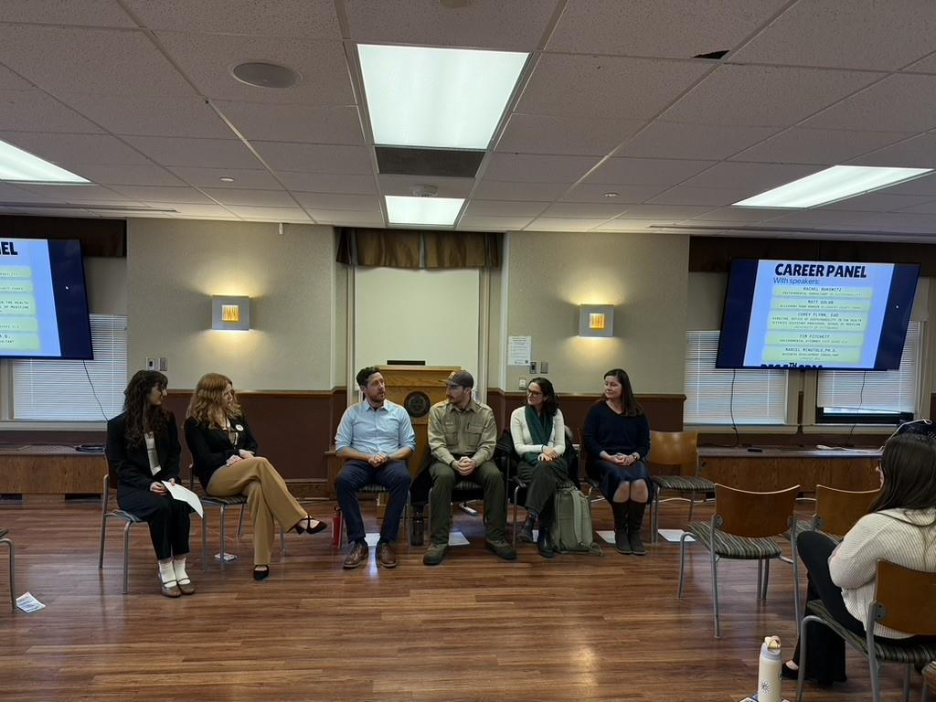
Tim Fitchett, Corey Flynn, Rachel Bukowitz (Environmental Science B.S. 2017), Matt Golub (Environmental Studies B.A., 2021)
Individual Sustainability Course Highlights
Sustainable Food Systems (GEOL 1307 taught by Corey Flynn (GES Instructor & Assistant Professor, School of Medicine) has been a course that is enrolled to capacity each semester that is taught.
For the fifth year, the Sustainable Food Systems class has made an impact through service learning projects. This year Dr. Corey Flynn took 25 students to five urban farms. Students learn the history and the importance of the urban farm. They then spend time working on the farm and end the session with a healthy meal while discussing what they have learned. Jodi McLaughlin of West End View Urban Farm was extremely thankful for the students' help in winterizing her space. Once the weather is too cold to be outside, the students go back to the classroom. This includes a lecture on nutrition security, learning how to rescue food for the Pitt student group, Food Rescue Heroes, and spending time in the Pitt Pantry. This year a panel of experts participated in a “speed dating” activity with students. Eric Milliron (Mt Lebanon), Isabela Angelelli (Clinicians for Climate Action), Denele Hughson (Grow Pittsburgh), Joanna Tamburino (Eco Districts), and Justin Lubecki (City Farms) said it was the best “panel” they had ever been on. The small groups allowed students to have meaningful conversations and make professional connections. The final is a Lifestyle Change Presentation where students share something they learned in the class they will carry forward in their life. The goal is for the student to identify something that is both good for them and for the planet. Students presented a diverse variety of topics that entertained and inspired the class. Examples include reducing plastic use, growing food, composting, trying a vegan and/or vegetarian diet, introducing native multi-species lawn alternatives, learning from the Indigenous community to consider future generations in our decision making, and a future backyard hoop house.
The Sustainable Food Systems course inspired a visitor from Qatar to start a similar experiential learning course. I helped to write the proposal and recorded a lecture for the first class. Ghanim said that it’s so popular that they want me to visit next year to speak in person.
- https://www.middleeastvegansociety.org/blog/qatar-launches-first-university-program-on-sustainable-food-systems-and-plant-based-awareness
- https://dohanews.co/qatars-first-accredited-university-course-on-sustainable-food-systems-launched/
- https://www.gulf-times.com/article/711825/qatar/qatars-first-university-course-on-sustainable-food-systems-launched
- https://www.middleeastvegansociety.org/blog/tag/Sustainable+Food+Systems
Urban Ecology and Sustainable Food Systems (Patrick Shirey 2019, 2021-2023; Corey Flynn 2024, 2025) - the pawpaw trees planted by Provost Academy students in 2019 at the School of Public Health Lawn at the PRT bus stop on Fifth Avenue bore fruit in 2025! This course is offered annually for incoming first-year students to introduce them to sustainability, urban ecology, and food systems at Pitt!
Other highlights:
- GES Students Participated in the Mascaro Center for Sustainable Innovation’s 2025 Summer Research Program
- GES Student Receives the PittSustainability Student Leadership Award
- GES Students are Student Sustainability Champions
- GES Student Part of Sustainable Engineering in Iceland - Spring Break 2025
- GES Sustainable Food Systems Class Donate 57lbs. of Produce!
- Pittsburgh Water Collaboratory - Emily Elliott
Home | Pittsburgh Water Collaboratory
Recent news:
- Hidden Impact of Drinking Water on Streams
- A new Pitt study helps identify where train derailments pose the greatest risk
- Water Collaboratory Provost Academy give students a fun introduction to the Three Rivers and Water Research (video with SurfsUp Adventures): https://www.instagram.com/reel/DP3yuLijqTr/
- The Ohio River basin is essential to America’s economy and environment. It needs more attention from Washington - Pittsburgh Post-Gazette
- Ohio River restoration plan hopes to rally federal support for watershed - The AlleghenyFront
- Bronze-Medal Telly Award for Riversense: Science Driving Water Equity (watch video here: Riversense: Science Driving Water Equity)
Student Recognition

List student awards & accomplishments (dissertations, presentations, etc.)
- Departmental Award Recipients
Environmental Science Field Scholarship
Chelsea McNeff Yellowstone Madison Oreski Yellowstone Norman K. Flint Memorial Field Geology Fund
Elijah Copich (Jones/Williams) Idaho State: Idaho Rockies Quinn Eisenberger Lehigh: Tetons, Yellowstone, Big Horn Basin WY Sandeep Karunaratne SDSM French Alps Allison O'Neil Illinois State: Yellowstone to Big Horn Mtns, WY Kayleigh Phillips (Werne) SDSM New Zealand Sasha Reeder Lehigh: Tetons, Yellowstone, Big Horn Basin WY Tyler Weinberger (Capo/Stewart) Idaho State: Idaho Rockies Samuel B. Frazier (BS, 1949) Student Resource Fund
Ella Clayton Camille Foessel (McQuarrie) William Schuck Christopher Hapke Memorial Planetary Award
Elijah Copich (Williams) Automatic Detection of Martin Scoria Cones Using Deep Learning The Heinz Environmental Studies Field Study/Internship Travel Award
Katherine Boyes West African Research Center in Senega Cassie Matalonis IES ‘Business, Sustainability, and Immigration’ in France Kyla Walker Pitt Global Services Learning in Puerto Rico Henry Leighton Memorial Scholarship Fund
Emeka Emordi (Werne) A Biomarker Record of Paleoclimate and Environmental Change in Tropical North America from the Sediments of Lake Chalco, Mexico Godspower Ubit (Werne) Reconstructing regional climate variability in Chilean Patagonia over the last 2,000 years from lake sediments Abby Yancy (Elliott) Assessing the impact of invasive knotweed (Reynoutria × bohemica) on riparian soil cycling Aidan York (McQuarrie) Obtaining New Thermochronometric Constraints for Deformation Events within the North American Cordillera, Western USA Dr. J. Frederick and Ann Sarg Research Fund
Jason Aguirre (Elliott) Identifying nutrient subsidies and hydrologic dynamics in urban streams Poushalee Banerjee (Shirey) Understanding the relation between differential growth rates and coexistence in native Brook and non-native Brown Trout across diverse stream habitats Adnan Deshaee (Bain) Tracing Contamination in Urban Waters Using Boron Isotopes: Insights from Philadelphia Background Sara Khan (Shirey) Reconstructing climate and environmental change in central Chile during the Common Era Anthony Schneider (Bain) Assessing Copper Riparian Dynamics in Knotweed Dominated Floodplains The Gary Sitler Graduate Award
Giannina Ramirez (Werne) Climate and Land Use Change Recorded in Sediments of Laguna Encantada, Chetumal, Mexico Fan Gao (Shelef) Systematic quantification of fault displacement along strike-slip faults to reduce earthquake hazards - Fellowships, Grants & Awards
American Fisheries Society Award Poushalee Banerjee (Shirey) 3rd Place in the best oral presentation category for the Pennsylvania Chapter of AFS ARCS Fellowship
Claire Mock (Ramos) Department of Defense
Anthony Stewart (Bain) SMART Fellowship K. Leroy Irvis Fellowship
Angelina Rodriguez (Capo/Stewart) Mascaro Center Summer Scholar
Rachael Betz (Shirey) 2024 - worked in lab summer & fall semesters 2024 on diatom identification for sediment cores from Chile Mellon Fellowship
Laura Lopera Congote (Abbott/Werne) Fan Gao (Shelef) Adnan Deshaee (Bain) Arthur & Barbara Pape Endowment Award (Pymatuning Laboratory of Ecology (PLE), Univ. of Pittsburgh)
Poushalee Banerjee (Shirey) PittSustainability Erika Ninos Student Leadership Award
Neeha Kolli - Environmental Science, 2025 (Balangoda/Carroll) NASA FINESST Grant
Gabriella Zuccollotto (Gardner/Elliott) NCAA Post-Graduate Scholarship
Clement Campbell (Bain) NSF Awards
Jason Aguirre (Elliott) GRFP Honorable Mention - 2025 Camille Butkus (Elliott) GRFP Honorable Mention - 2024 Abby Yancy (Elliott) INTERN Fellowship - 2024 Wegemer Fellowship
Fan Gao (Shelef) - Presentations
AGU24 Student Presenters


Graduate Students
- Camille Butkus (Elliott) - Abstract: Liposome Carriers for Nitrogen Alter Soil Carbon and Nitrogen Cycles
- Eli Hall (Elliott)- Abstract: Employing Remote Sensing and Stable Isotopes of Nitrate to Explore Nutrient Sources Driving Algae Blooms on the Allegheny Reservoir
- Emrah Ozpolat (Shelef) - Abstract: Comparing the Magnitude of Hillslope and Channel Erosion in Continuous and Discontinuous Permafrost Areas in Alaska
- Rajaram Prajapati (Gardner) - Abstract: A global perspective on riverine suspended sediment trends and drivers
- Punwath Prum (Gardner) - Abstract: A spatially explicit Landsat surface reflectance database for long-term understanding of water quality in coastal rivers and estuaries worldwide
- Tianyue Qu (Shelef)- Abstract: Destruction of Escarpments through Coupled Migration of Knickpoints and Windgaps
- Hailey Sinon (Abbott) - Abstract: Radiocarbon Age-Offsets from Two Lakes in Arctic Alaska Suggest Warming Leads to Predominance of Young Organic Carbon Rather Than Permafrost-Derived Materials
- Jamie Vornlocher (Abbott/Werne) - Abstract: Plant Wax Hydrogen Isotopes Reveal Hydrologic and Methane Cycle Changes at Fish Lake, Utah
- Abby Yancy (Elliott) - Abstract: Field evidence of altered riparian soil nitrogen cycling by non-native knotweed (Reynoutria × bohemica) in Western Pennsylvania (USA)
- Gabriella Zuccolotto (Gardner/Elliiott) - Abstract: Frequency, Severity, and Extent of Algal Blooms since 1980's in Eastern US Rivers
Undergraduate Students


- Geetika Godavarthy (Elliott) - Abstract: Analyzing Water Quality Sampling Bias in U.S. Rivers and Streams
- Hannah Kovic (McQuarrie) - Abstract: Structural drivers for fault-driven topographic uplift in Central Taiwan
- Kayleigh Phillips (Werne) - Abstract: Unraveling Poison Ivy's Response to Climate Change: An Analysis of Toxicity
- Olivia Rossi - Abstract: Refining Lab Methods to Determine Best Practices for Plant Tissue Nitrate Extractions
- Benjamin Schuler - Abstract: Identifying Volumetric Changes and Thermal Anomaly Trends at Active Volcanoes Using ASTER Orbital Data
- Tyler Weinberger (Capo/Stewart) - Abstract: Partitioning of Trace Metals Between River Water and Bivalve Shells and Implications for Geochemical Proxies
Other Conference Presenters
- Mari Avkopashvili (Bain) was invited to give one of the talks at the Pittsburgh Geological Society’s annual Student Night.
- Poushalee Banerjee (Shirey) presented at a local and international meeting of the American Fisheries Society.
- Kristi Dobra (Capo/Stewart) gave two conference presentations.
- Mackenzie Zabroba (Bain) presented her work on landslides at National Conference on Undergraduate Research.
Student Capstone Experiences
We want to celebrate the incredible journeys of our students—many journeys made possible through the generosity of our alumni. Through internships, field studies, and capstone projects, our scholars have explored their passions, tackled complex challenges, and gained hands-on experience that prepares them for meaningful careers. Each story reflects the creativity, resilience, and dedication that define our community, offering a glimpse into how students are shaping their futures and contributing to the world. We are so grateful for the support of our alumni in helping to transform classroom learning into real-world impact. Here are just some of the many Student Capstone Experiences!

Distinguished Alumni
2025 Distinguished Alumna: Dr. Emily Mercurio
Alumni News
Welcome Alumni!

- Share the News!
We love hearing (and seeing pictures) from our alumni and how they are doing! Please be sure to update us regarding your career and life events!
- Graduating Classes
Graduating classes - please welcome our new class of 2025 graduates!
- Alumni News
Alumni News – see what our GES Alumni have been up to personally and professionally.
- In Memoriam
In Memoriam - honoring and remembering the members of our alumni community who have passed away.
Support GES

Your contributions help advance the Department's missions and create opportunities for students and faculty. We have a number of giving opportunities that help to provide grants and scholarships to deserving and eager students. These contributions help to fund research, field studies, and much more. Click here for a full list of giving opportunities.
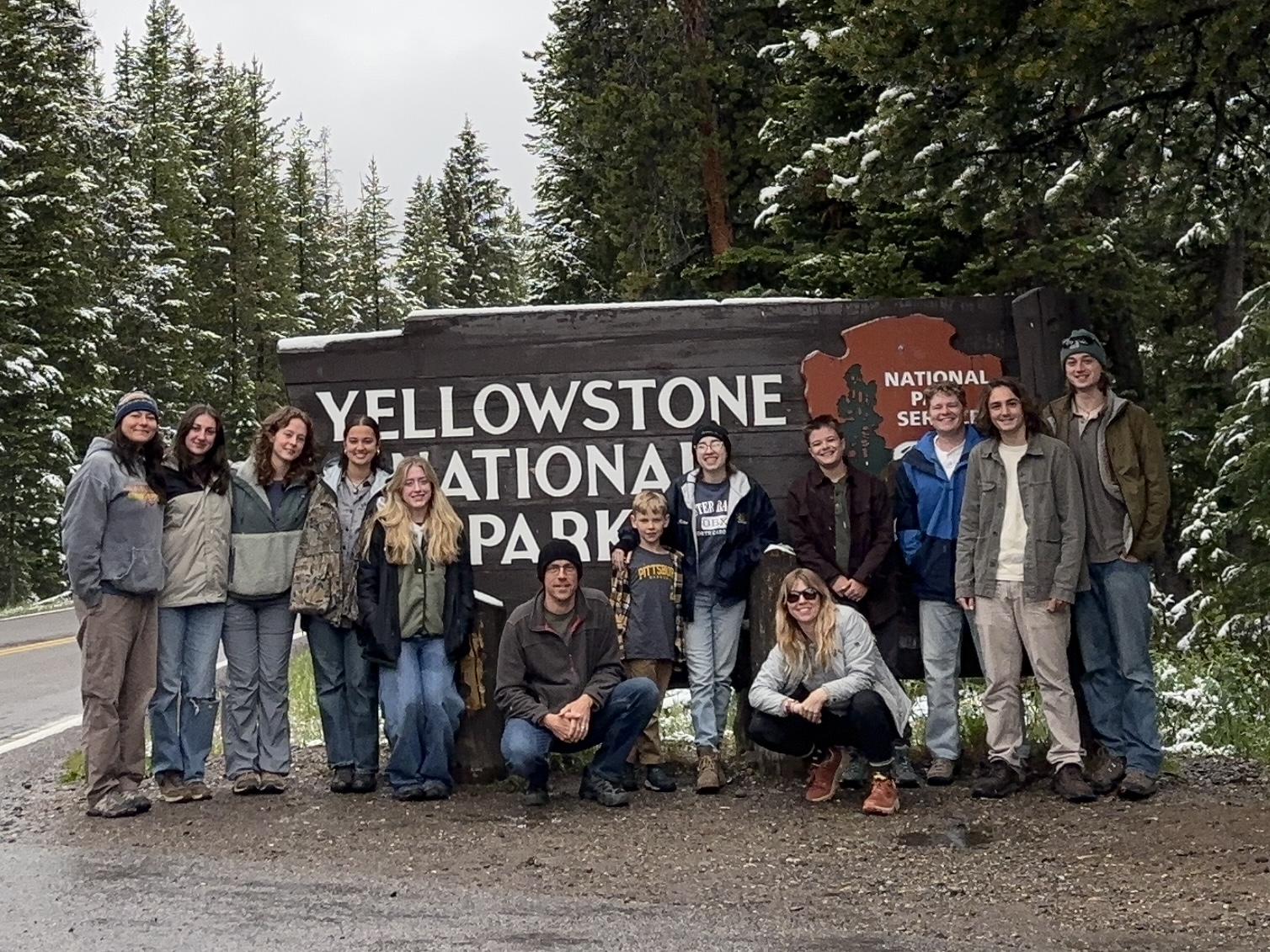
Here are some examples of how your generosity can help students participate in unique, life-changing field camp experiences.
“Overall, I felt an internal shift that strengthened my connection with nature and inspired me to strive to continue grounding myself with the natural world.” - Chelsea McNeff, Environmental Science ‘26, 2025 (Environmental Science Field Awardee)
“…The cultural aspect of our environment, changed or (perhaps more accurately) encouraged and honed my passion for these areas of study and the Western way of life. …The environment out there is so expansive and relatively undisturbed, and I know that I would like to work to keep it that way, as well as the fact that I’d like to come back there one day. Getting a glimpse into the Western way of life by living on the ranch was one of the coolest experiences for me, and I found that I thought I could see myself working out west, whether for the park, BLM, or someone else. Overall, I’m just so glad that I got to have this experience; it really meant the world to me, and I feel like it changed me for the better.” - Madison Oreski, Environmental Science ‘26, 2025 (Environmental Science Field Awardee)
We are so looking forward to offering such an incredible and unforgettable experience to our Pitt students once again! If you would like to know more, please visit the Pitt GEO website here: https://www.globalexperiences.pitt.edu/wyomingyellowstone.
Pitt’s Day of Giving is scheduled for February 24, 2026! Help our department shine!